
Ominous
In which are considered shady eating habits, throwing mud at Alexander the Great, and affinity for corpses.

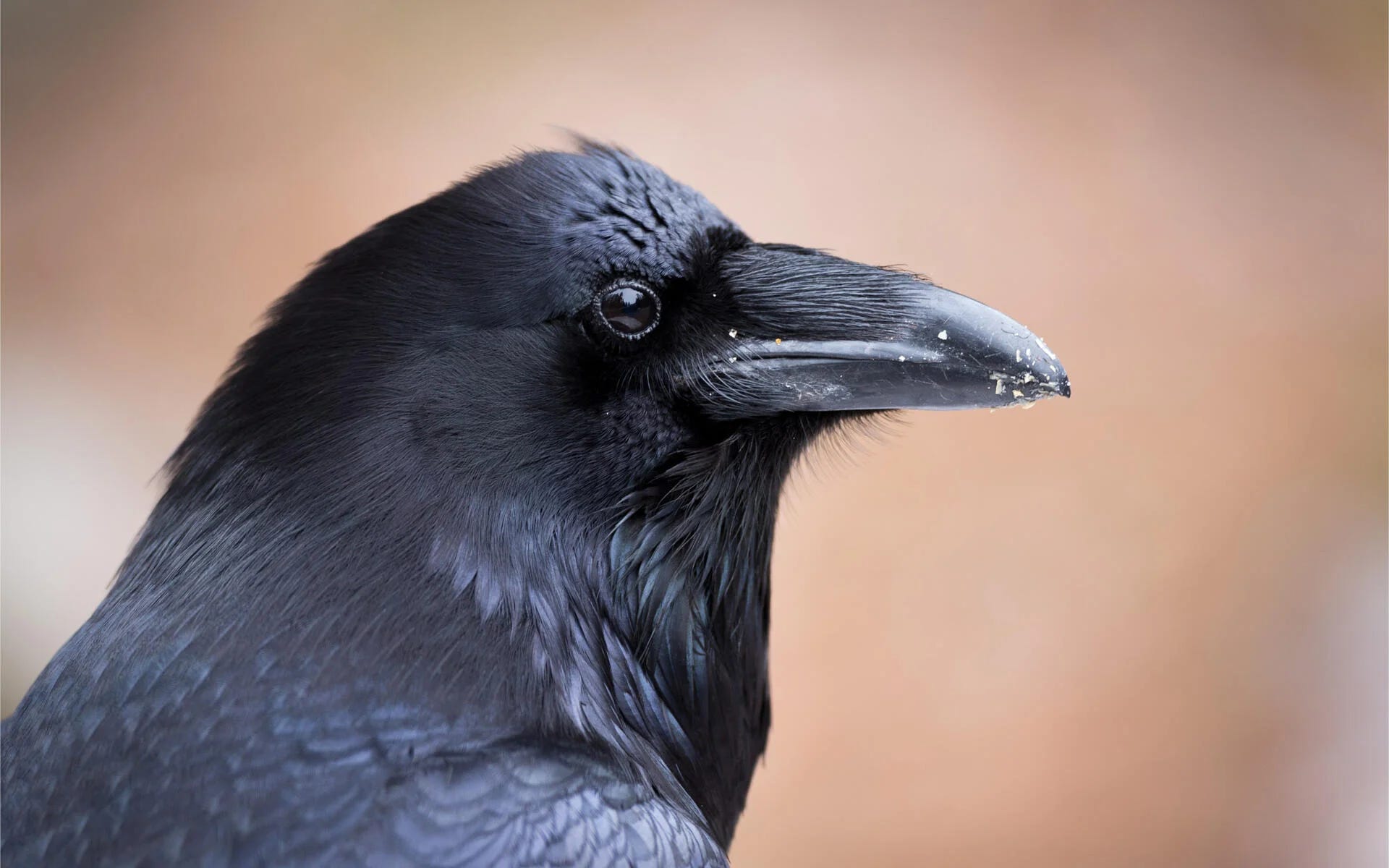
Expanding on their macabre associations, the natural mysteries of ravens and their particular numinous meanings and magics are frequently considered ominous. This term is especially apt to note, in that it covers both raven’s relationship to the dangerous and unknown but also the very portentousness that there is something (ill) to be understood by the appearance of these understanding black birds.
There is a continual sense of the raven’s unsettling deathliness; ‘an vncleane bird, [who] sitteth vpon carrens, and asketh and taketh meate of venemous and vncleane things’.1 This uncleanliness has a Biblical justification, with Leviticus 11 forbidding the consumption of the raven as amongst those considered ‘abomination among the fowls’. King James’ Leviticus 11:15 gives the exact wording as ‘every raven after his kind’; also rendered elsewhere as (any) ‘kind of raven’ and ‘various kinds of ravens’, suggesting once more the porousness of definitional categories amongst the corvids. The raven’s ominous virtues are well understood as founded in explicit eating habits however: as one scholar has summarized, ‘the raven is the bird of death, for he feeds on corpses,’2 that is, the uncleanest meat.
Shady (eating) habits and habitat mark a dangerous animal, especially one who moves between such dangerous environments and our own; but the raven is not primarily dangerous like a predator. The sighting of ravens presage danger for many peoples, but the bird itself is more herald of the threat than its source. For the raven is a futurological creature – ‘as Diuinours meane, the Rauen hath a manner vertue of meaning and betokening of diuination… therefore, among Nations, the Rauen among foules was hallowed to Appollo, as Marcius saith’3 – and seems especially sensitive to the coming of death and the banquet-wake it leaves behind. A wise and ominous bird of battlefields and prophecy was of course observed and augured to predict victory and warn of defeat. Sixteenth-century herald John Bossewell relates one such tale of the latter:
‘I reade that when as Alexander the great, laied siege to the Citie of Gaza, minding before he would geue an assault therunto, to make Sacrifice after his countrey maner, and to require the ayde ef the Goddes: It chaunced as he was so doinge, that a Rauen flienge aboue, let fall a clod which she caried in her clawes vpon the kings head, where yt brake and resolued in pieces, which being consulted vpon by the deuinours: They iudged that there was some perill towardes the kinges person, And suche a Rauen may be borne in coate armour as is aforesayde, and that to a good purpose, and without any challenge in bearinge him after this forme, as is aboue displayed.’4
Ravens - and/or sometimes snakes - are also said to have guided the Macedonian general on his way to seek recognition and further legitimisation at the oracle at Siwa after invading Egypt too. In this case of the siege of Gaza however, the raven strikes Alexander to demonstrate and ultimately mitigate against the king’s over-extension. A group of ravens may indeed be called an ‘unkindness’, but if properly understood these stern dojo-masters and their impact training may ultimately save our skins. We will find ourselves becoming especially familiar with this motif of raven’s tough love, especially in addressing or exploiting the pride of monarchs, over the course of this present study.
A bird sympathetic to the grave, nurtured by poisons and battlefield fallen, and bearing oracular patronages and mysterious foreknowledge could understandably be said by the augurs witnessing its flights and fancies outside the field of combat similarly to ‘betoken the death of the men of that country, and those houses’, with Agrippa reasoning out ‘for those birds are delighted with dead Carkases, and perceive them before hand’; adding in conclusion that, similarly, ‘men that are dying have a neer affinity with dead Carkases.’5
Stephen Bateman, Batman vppon Bartholomew, his booke De Proprietatibus Rerum (London, 1582), Ch. 10 ‘Of the Rauen’, 182:
‘Also he is an vncleane bird, and sitteth vpon carrens, and asketh and taketh meate of venemous and vncleane things, and as Diuinours meane, the Rauen hath a manner vertue of meaning and betokening of diuination. And therefore, among Nations, the Rauen among foules was hallowed to Appollo, as Marcius saith.’
E.O.G. Turville-Petre, Myth and Religion of the North: The Religion of Ancient Scandinavia (Greenwood Press, 1975), 58.
Batman upon Bartholomew, 182.
John Bossewell, Workes of Armorie (London, 1572), 101-102.
Heinrich Cornelius Agrippa, Three Books of Occult Philosophy trans J.F (London, 1651), 113:
‘Almadel saith, that Owls, and night-ravens, when they turn aside to strange countries, or houses, betoken the death of the men of that country, and those houses; / (for those birds are delighted with dead Carkases, and perceive them before hand. For men that are dying have a neer affinity with dead Carkases.’